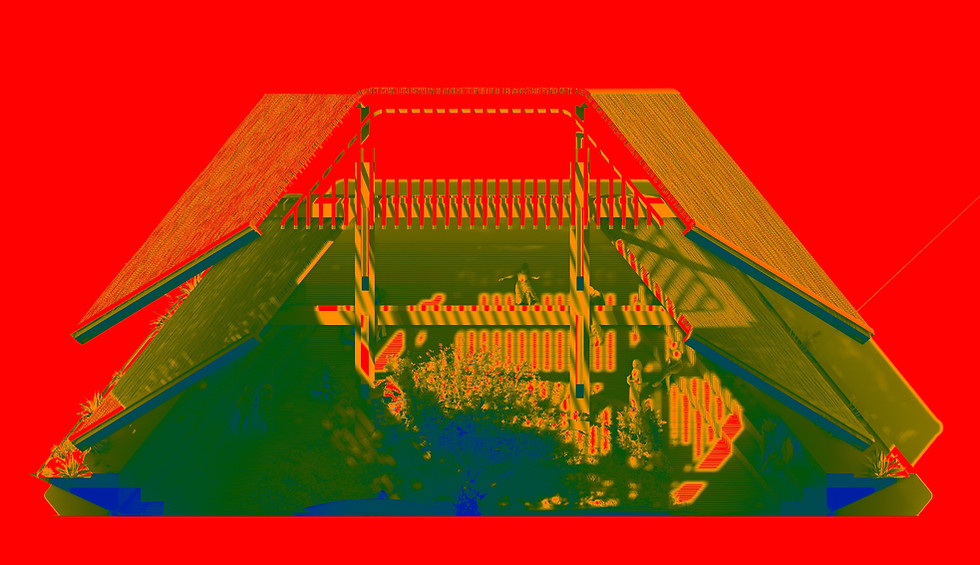
Genshiteki is a cabin or pagoda built with local materials, designed as a refuge, a new city landmark, and a small climatic oasis. Made of Spanish chestnut wood joined with traditional interlocks and steel clamps, the structure sits on a stepped plaza that recalls a small open-air theater, with tiered seating and a final level that doubles as a planter filled with low-maintenance Mediterranean plants.
Above, two roofs supported by chestnut beams are wrapped in a woven bamboo skin, with optional hemp-fiber or stucco layers for added insulation. At the top, a central grid captures zenithal light and rainwater for an interior garden. Tubular lights with optical fiber—each powered by its own miniature photovoltaic panel—are integrated into this grid, creating a self-sufficient lighting system.


architecture
architecture
Genshiteki is a Japanese word composed of two meanings: truth and reality.
It evokes a return to the fundamental and pure roots of humanity and nature. It is born from direct contact with matter and the most elemental forms, like a refuge that withstands the passage of time without losing its original strength.
This idea has merged perfectly with the context of the Felipe VI Park in Logroño, taking advantage of its existing geometries and transforming itself into a large cabin-totem capable of blocking heat, embracing nature, and offering a new meeting point for the citizens of Logroño.
public building
genshiteki
Logroño, Spain
2024
.png)
useful
mistakes